
What a GI tag is
A Geographical Indication is a name used for a product whose quality or reputation comes from the place it is made. In India, GIs are registered under the Geographical Indications of Goods (Registration and Protection) Act, 1999, by the Geographical Indications Registry in Chennai. Darjeeling tea, Mysore silk and Bikaneri bhujia are all GIs.
How Bikaneri bhujia got it
The application was filed by the Bikaner Bhujia Udhyog Sangh, the association of the city's bhujia makers, and appears in the registry as application no. 142. Registration was granted in 2010, covering bhujia made across Bikaner district.
The application describes the things that make the snack local: moth bean grown in the desert, the dry Bikaner climate that helps the fried strands stay crisp, and a method and spice tradition handed down in the town's families.
What the tag protects
The GI protects the name, not a single brand. In practice it means:
- only bhujia made in Bikaner district can be sold as "Bikaneri Bhujia"
- makers there can register as authorised users of the GI
- a snack fried elsewhere can still be good bhujia, but it should not be sold under the Bikaneri name
What it means when you buy
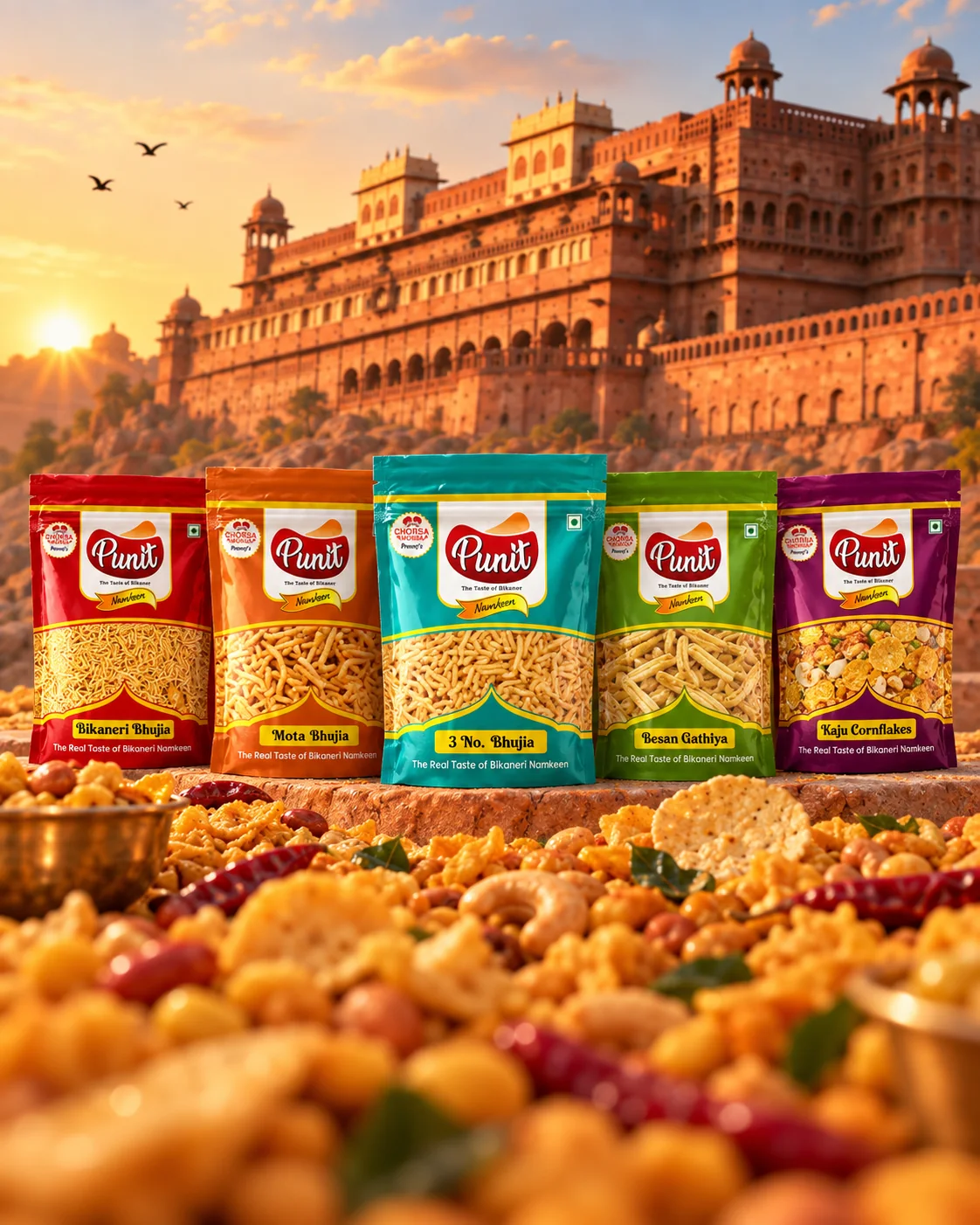
Look for where the pack says it was made. Every Chorsa Morsa pack is made in our own kitchen at Gangashahar, Bikaner, and the address is printed on the back of the pack and on each product page.
Being made in Bikaner is a starting point, not a guarantee of taste. Ask what flour the maker uses: real Bikaneri bhujia leans on moth flour. Ours is 47.5% moth flour, milled from whole moth bean in our own shed (see how bhujia is made).