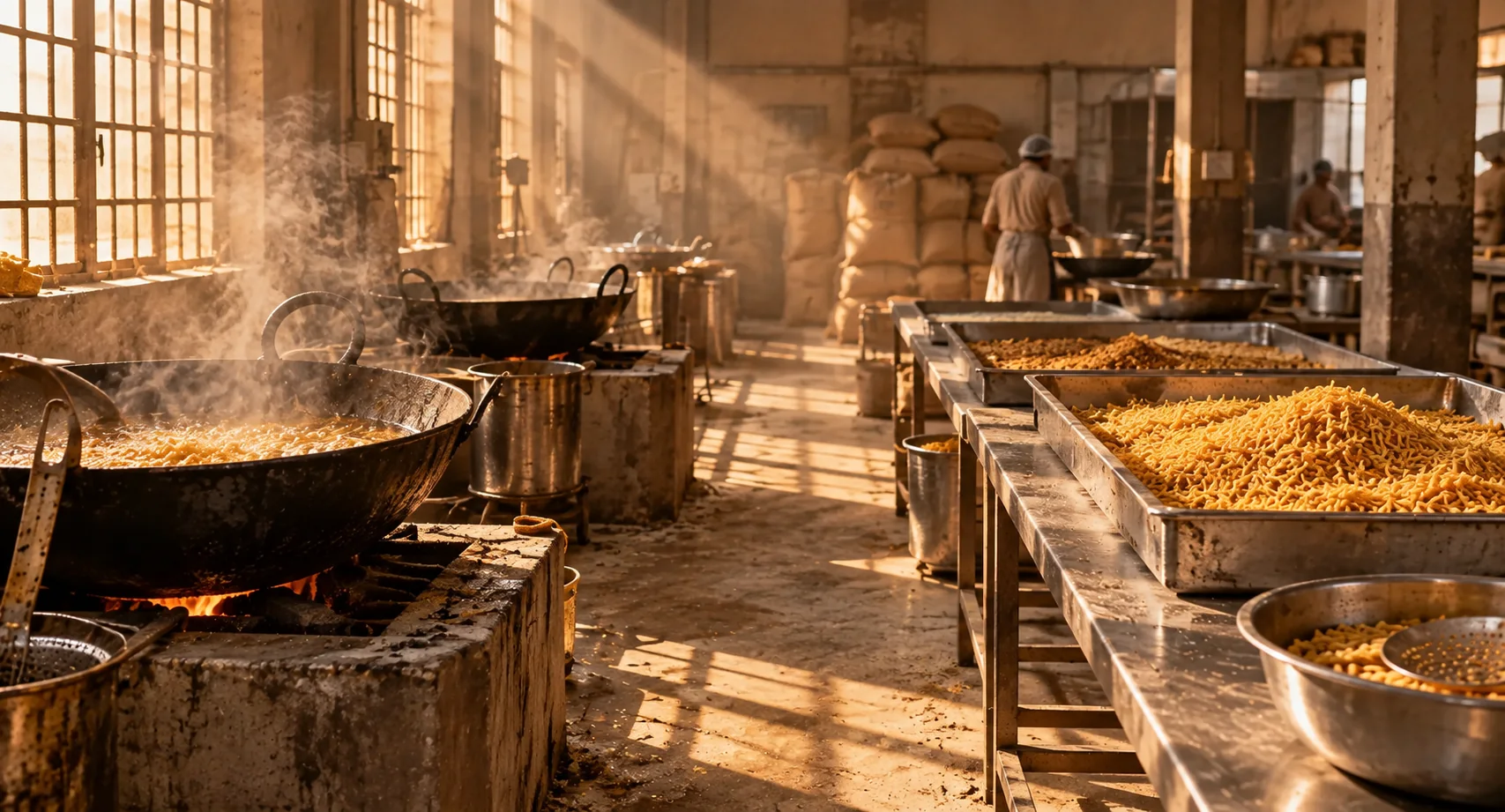
Nine stages sit between a sack of whole moth bean and a sealed 400 g packet. None of them are complicated. All of them are easy to cut short, and the taste is the first thing that tells on you when you do.
Stages
9
Spice ratio since
1965
Sealed packet
400 g
The line, start to finish.
Bhujia is a short recipe made carefully, not a long recipe made fast. Here is the whole order of work before any of it is explained.
01
Grain arrives
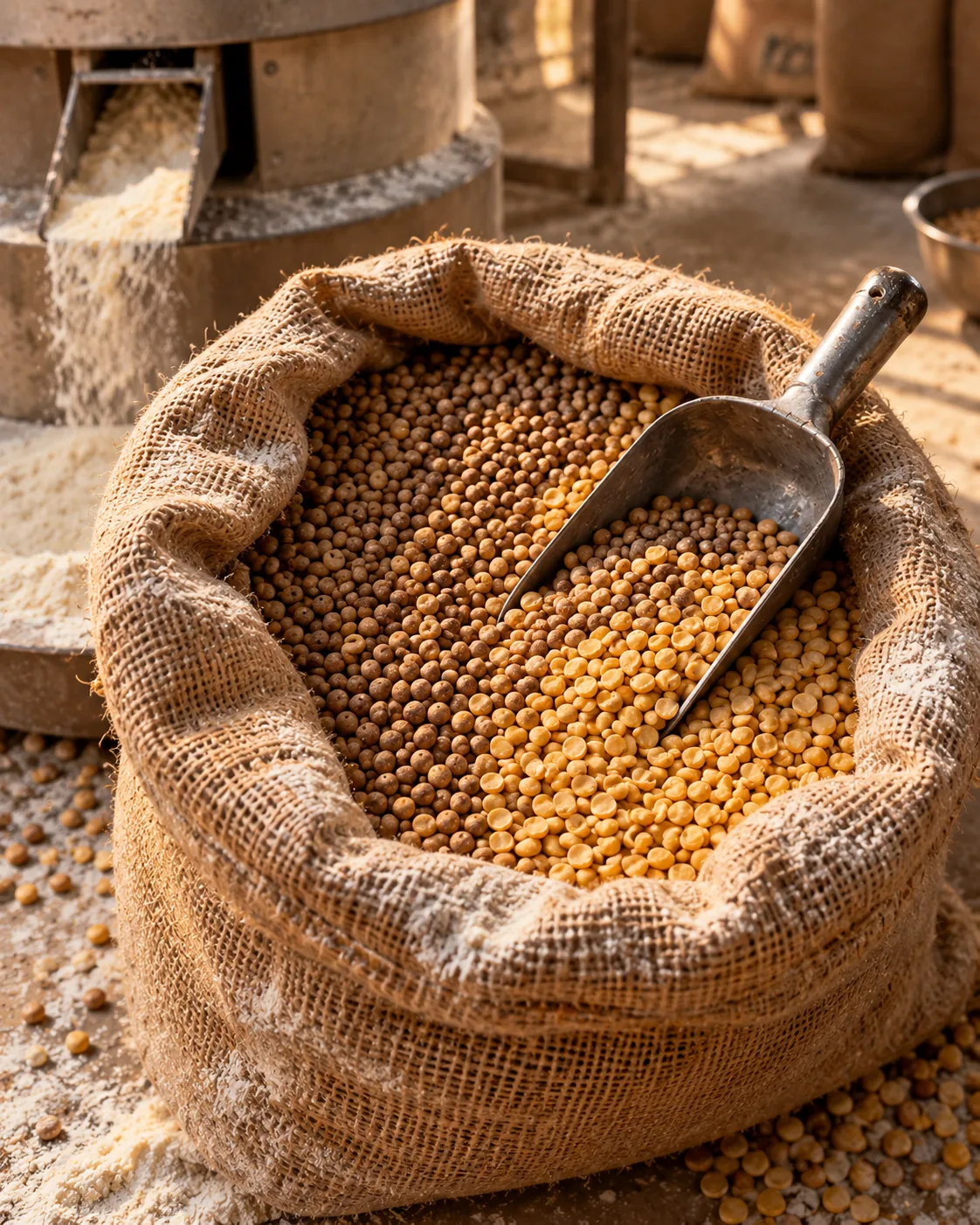
Whole moth bean and gram, by the sack, bought as grain rather than as flour.
02
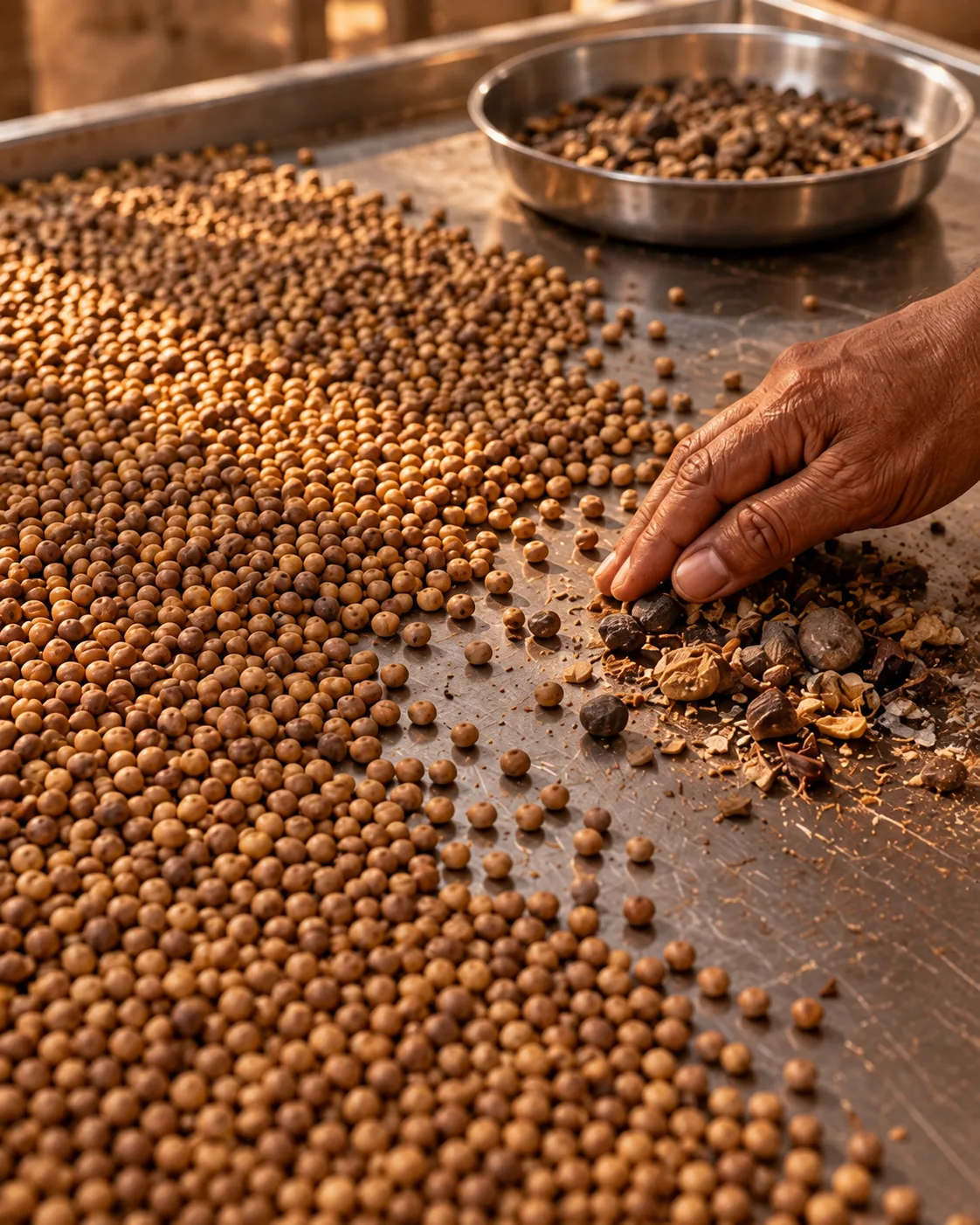
Cleaned and sorted
Stones, husk and broken grain come out before anything reaches the mill.
03
Milled here
Grain goes in whole and comes out as moth flour and gram flour on our own stones.
04
Spices weighed
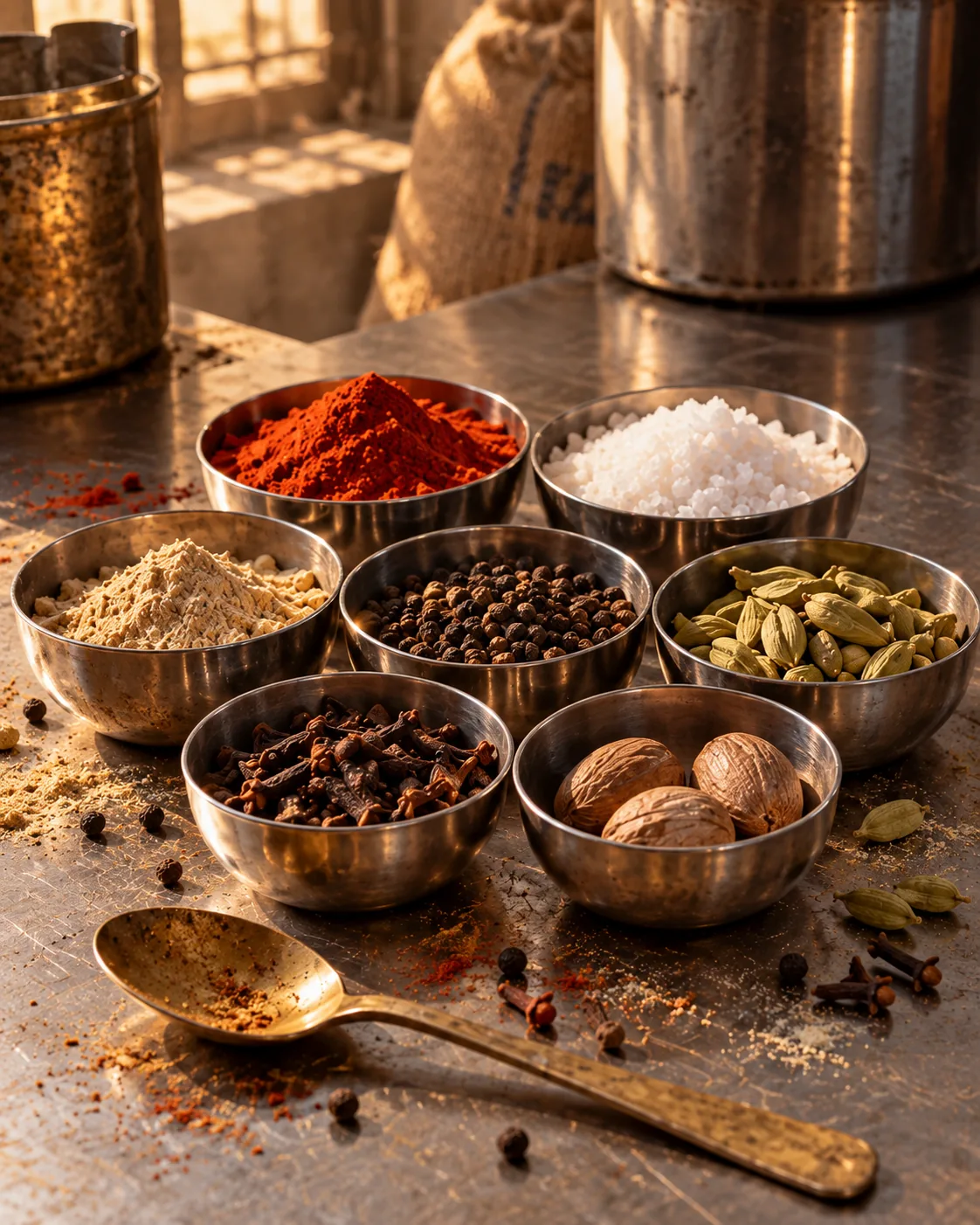
Seven of them, ground and weighed to the ratio the bhujia has always used.
05
The dough
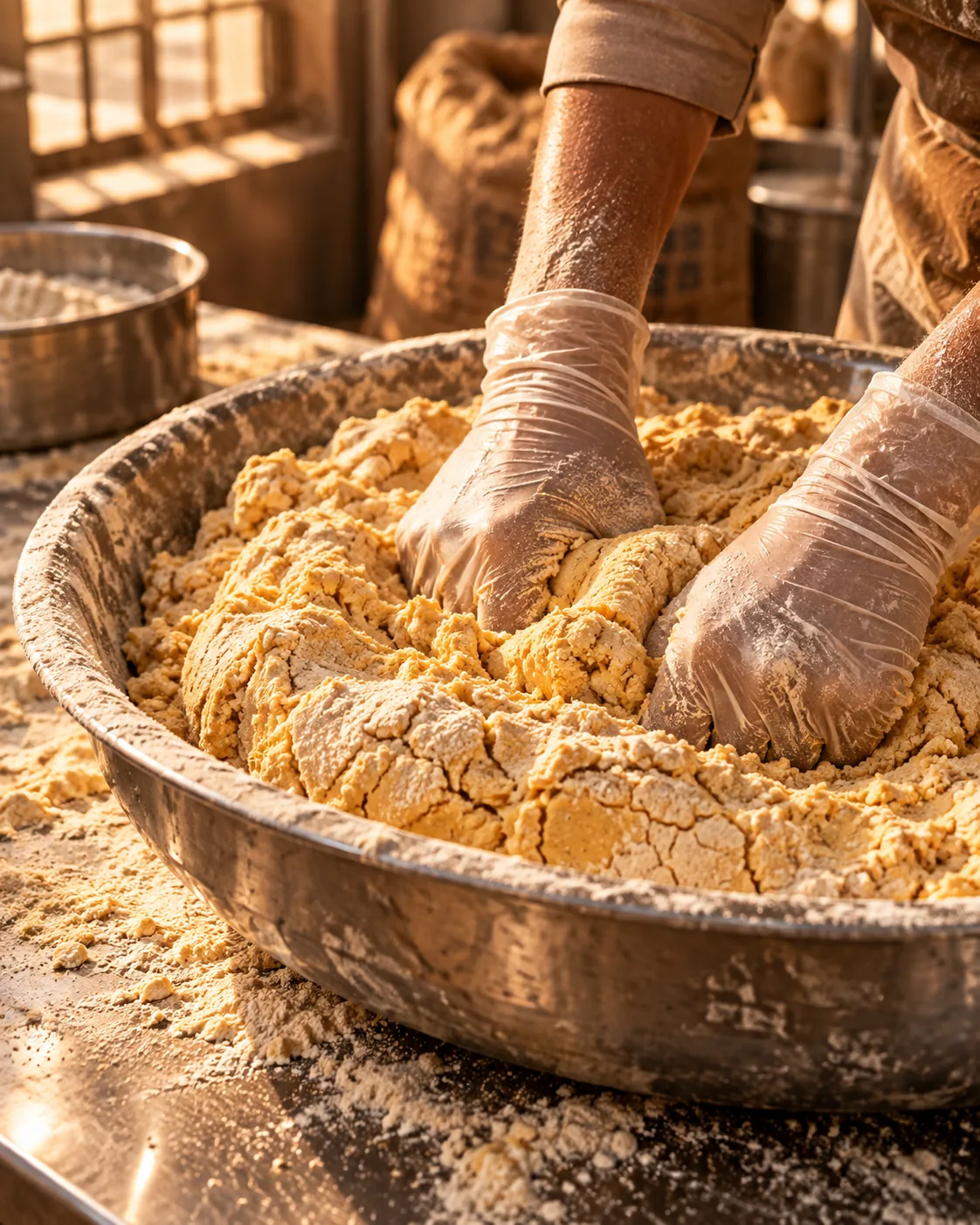
Flour, spice, oil and water worked to a stiff dough that will hold a strand.
06
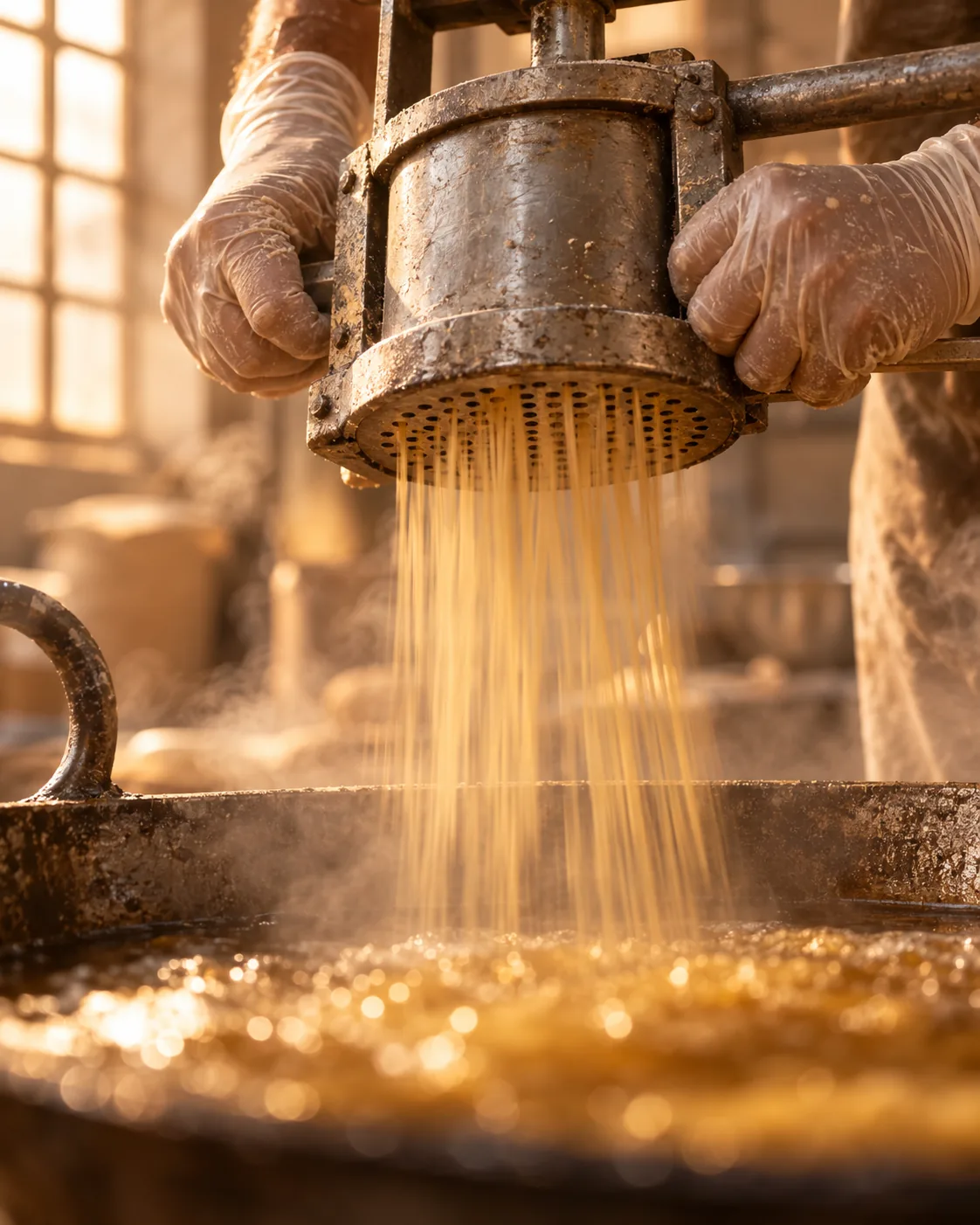
Pressed
The dough goes through a perforated plate and falls straight into the oil.
07
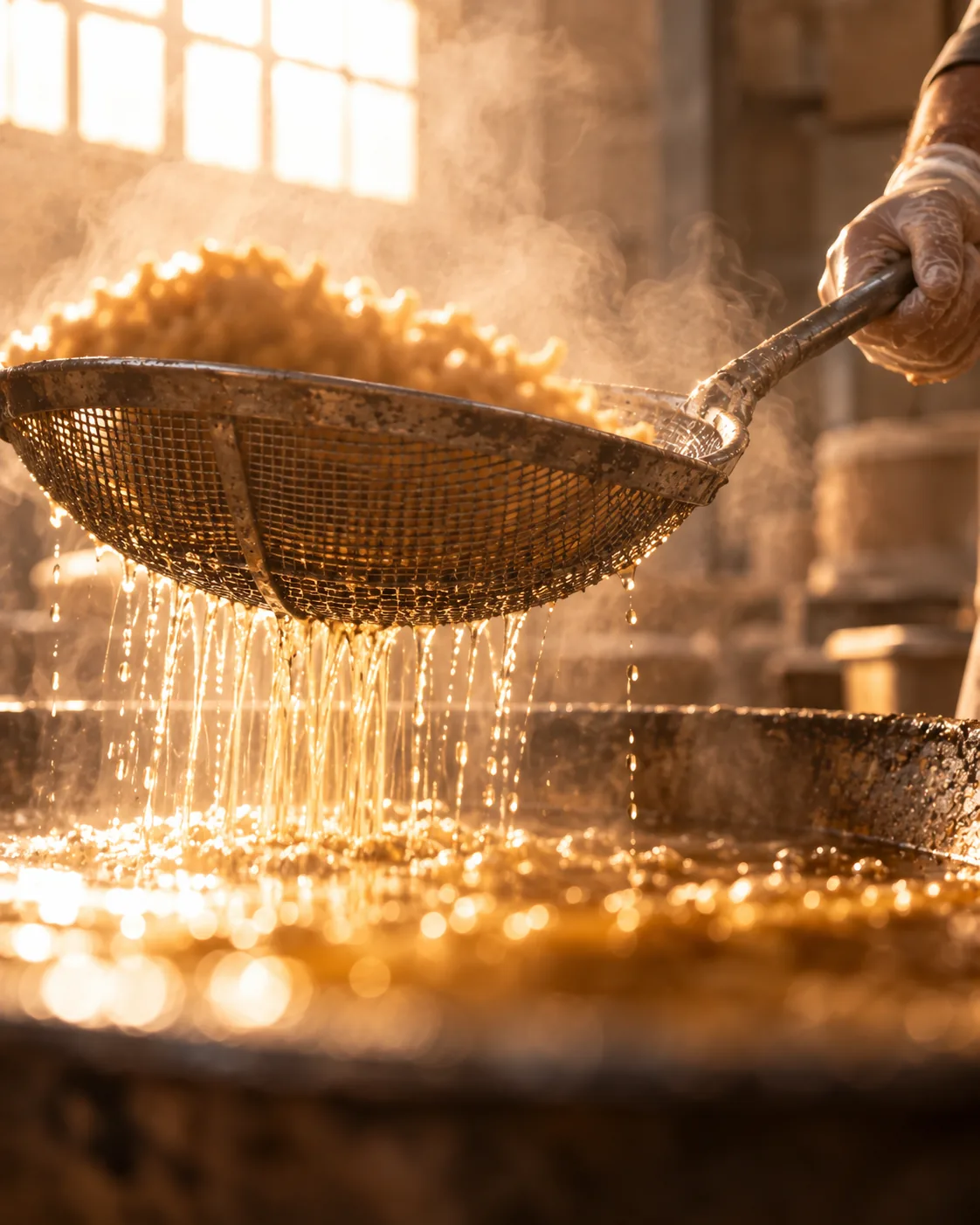
Fried
Small kadhai loads. The strands set in seconds and come out the moment they colour.
08
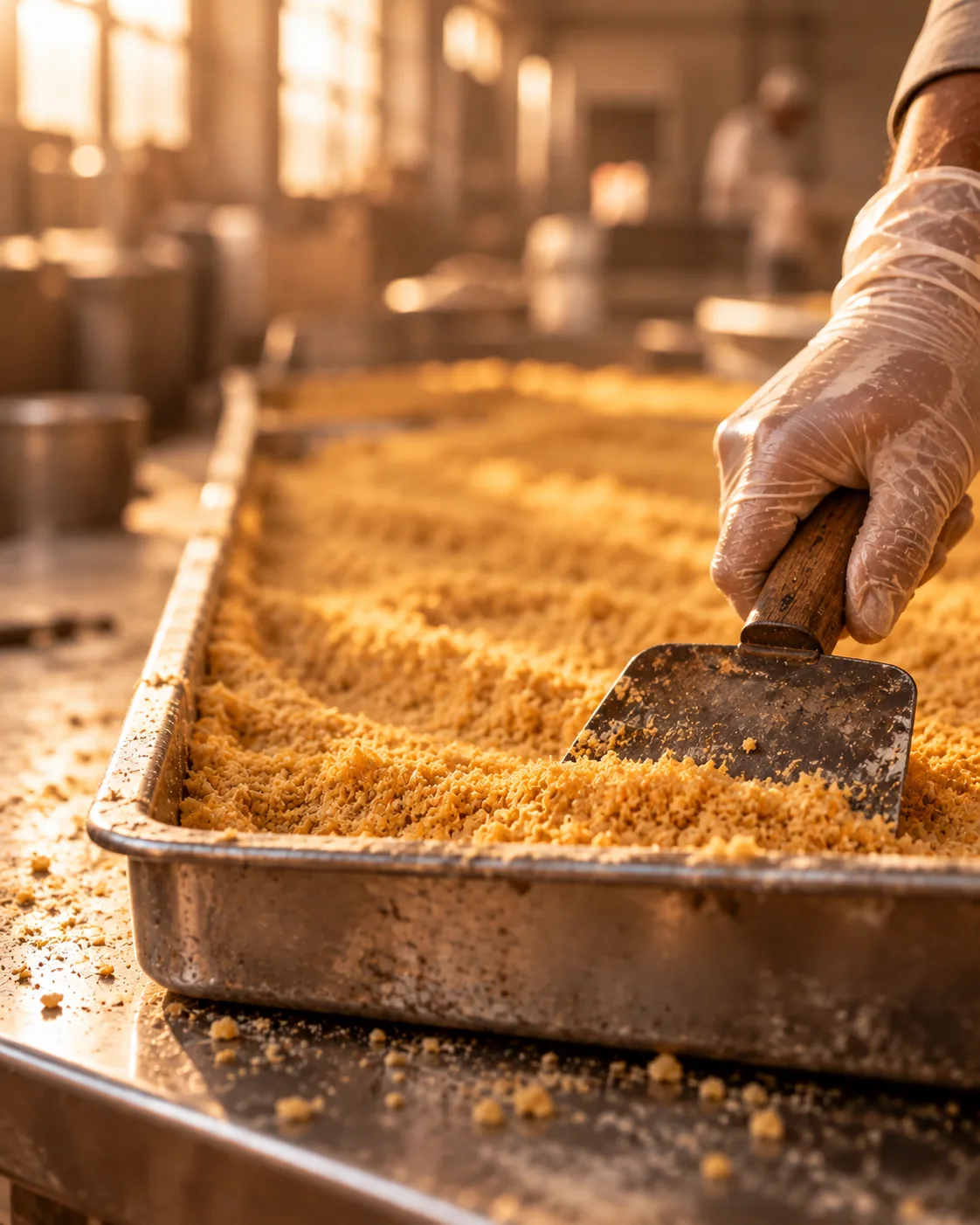
Drained and cooled
Raked flat in wide steel trays so every strand loses its heat at the same rate.
09
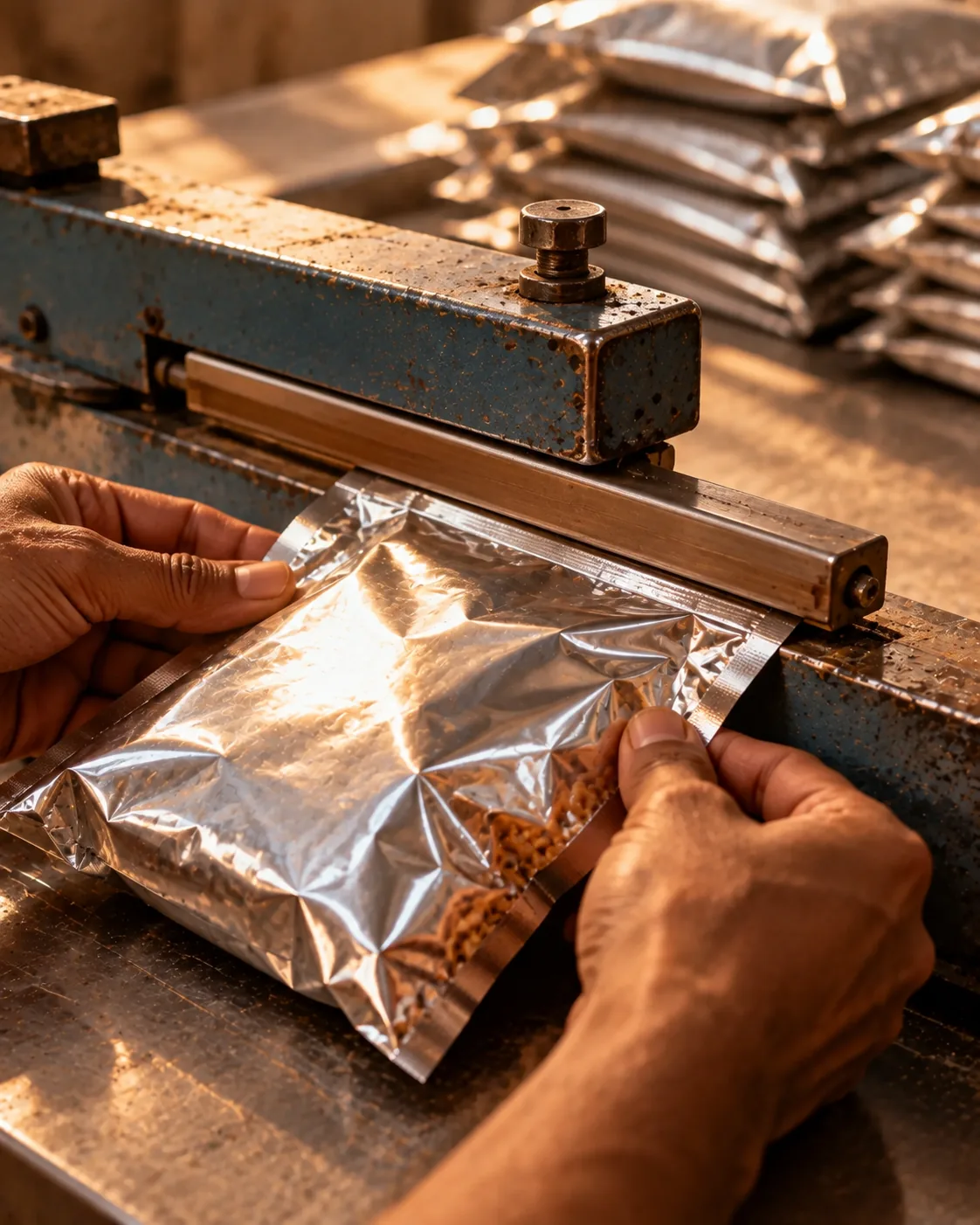
Weighed and sealed
400 g, sealed, then stamped with the batch, the date and the best before.
Inside the kitchen
Eight stages, up close.
Grain
We buy grain, not flour
Moth bean and gram arrive whole. Ready-milled flour is cheaper and it arrives faster, and the moment you take it you have stopped knowing what is in your own bhujia. Everything before the mill is the part nobody tastes and everybody can tell.
Clean
The boring hour that decides the batch
Grain is spread thin and picked over before it is milled: stones out, husk out, broken and shrivelled grain out. One stone through the mill is a bad packet somebody opens two months later, and by then there is nothing to be done about it.
Mill
Milled here, in the same shed
The cleaned grain goes on our own stones and comes back as moth flour and gram flour. Bhujia is a little under half moth flour, with gram flour behind it, so the grind is the texture. Too coarse and the strand breaks in the oil, too fine and it turns to paste.
Spice
Seven spices, one ratio
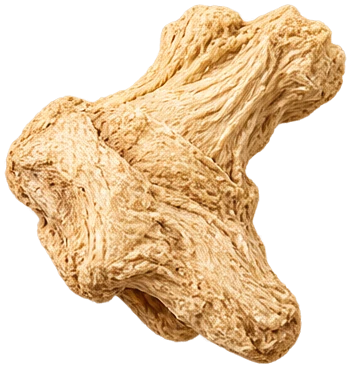
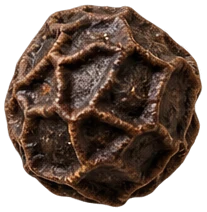
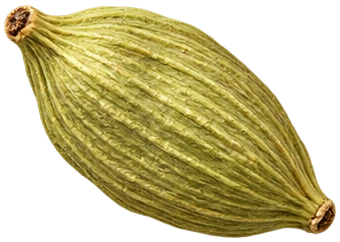
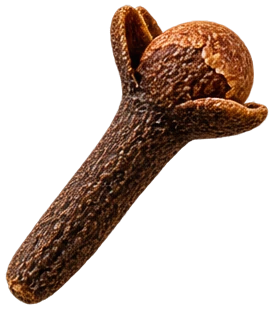
Iodised salt, red chilli, ginger, black pepper, cardamom, clove and nutmeg, ground and weighed against the flour rather than thrown in by eye. The ratio has not been rewritten since 1965. Bhujia No. 3 is the one exception, and the only thing added to it is bishop's seed.
Dough
Stiff enough to hold a strand
Flour, the spice mix, oil and water go into a wide steel parat and are worked until the dough is stiff, even and just short of dry. Slack dough falls through the plate in blobs and fries into knots. This is the stage done by feel, and the only one nobody has managed to write down.
Press
The plate decides the bhujia
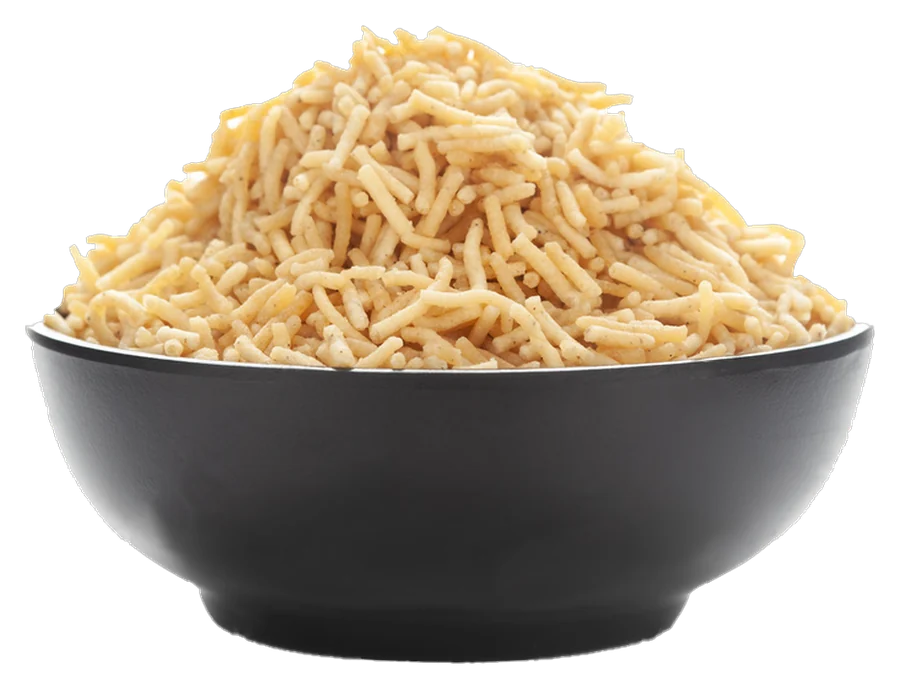
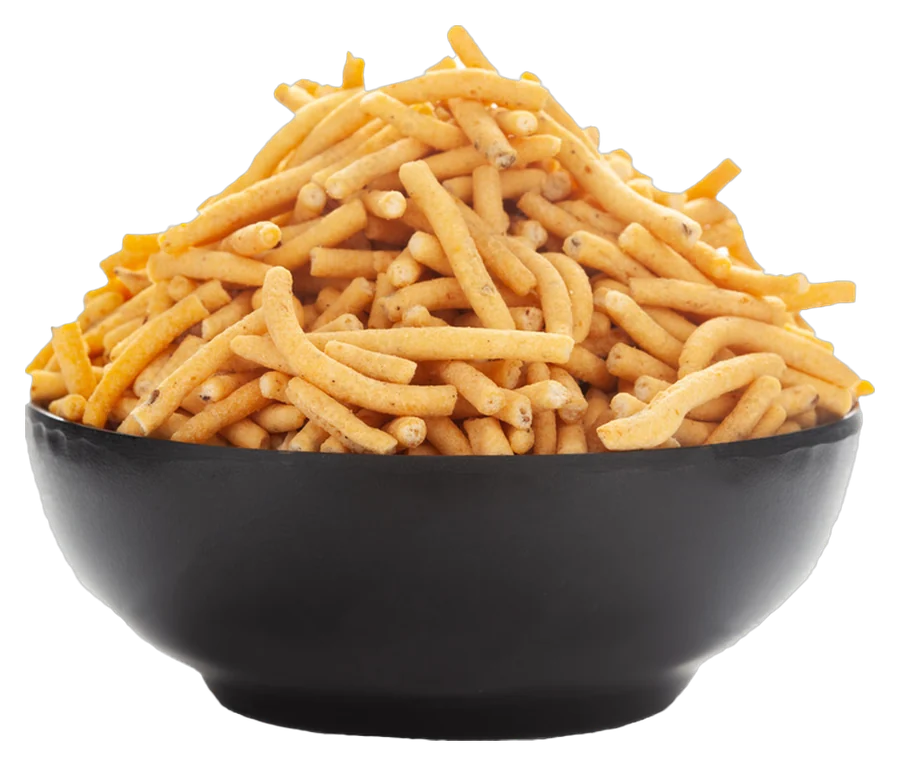
The dough is pressed through a perforated plate held over the kadhai, so the strands form in the air and land in the oil already separated. Change the hole size and you have changed the product: the same dough makes fine Bikaneri Bhujia through one plate and Mota Bhujia through another.
Fry
Small loads, clean oil
Modest kadhai loads keep the oil from tiring and stop the temperature falling away when the dough hits it. It is slower than filling the vessel, and it is the difference between the first packet and the last tasting the same. The strands come out the moment they take colour, not after.
Cool and seal
Cooled flat, then closed
Fresh bhujia is raked into an even layer in wide trays, because a heap holds its own steam and goes soft in the middle. Once it is cool and dry it is weighed to 400 g, sealed, and stamped with the batch, the packing date and a best before four months out.
One dough. Three cuts.
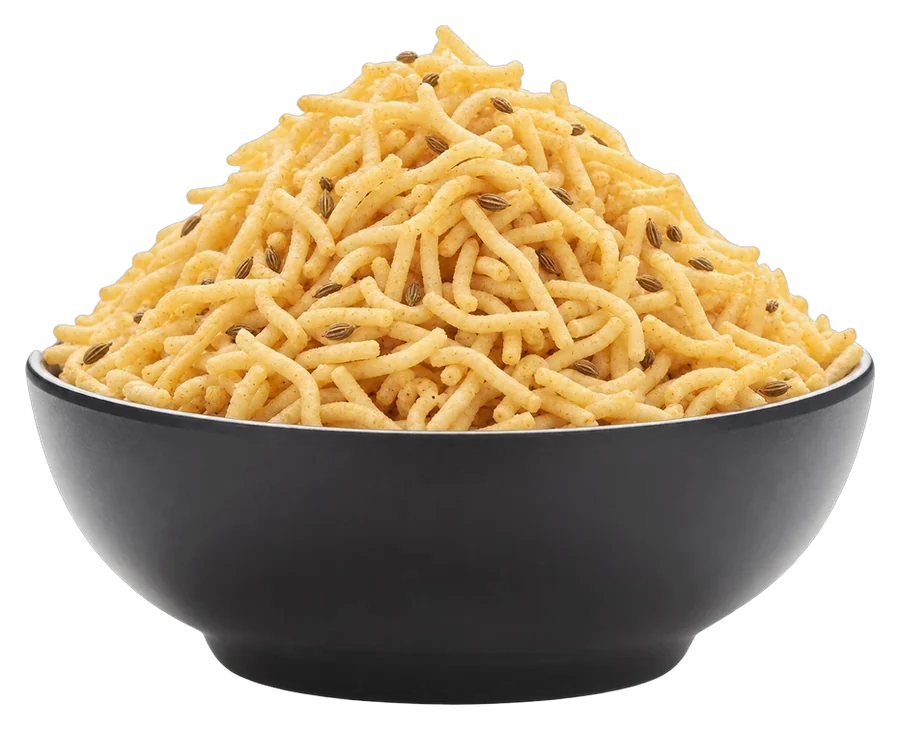
Fine, thick, and the one with bishop's seed in it. They share a flour, a spice ratio and a kadhai. The plate they are pressed through is most of what separates them.
Bishop's seed goes into the dough. It is the only recipe change in the three, and it is the whole reason this one has its own name.
What is in the spice.
The whole declared list for Bikaneri Bhujia is moth flour, oil, gram flour and these seven. No masala base is bought in, and there is nothing in it that is not printed on the back of the packet.
Salt
Iodised salt
Weighed, not sprinkled
Red chilli
The heat and the colour
Ginger
Dried, then ground
Black pepper
The slow back note
Cardamom
Green, ground whole
Clove
Small share, long finish
Nutmeg
The one people cannot place
1965
The year the first kadhai went on, and the year this spice ratio was set.
7
Spices in the bhujia. The list on the packet is the list in the dough.
400 g
One pack size across the everyday range, so a shelf reorders in one message.
4 months
Best before, counted from the day it was fried rather than the day it shipped.
Where we do not bend
Three things we will not do.
Push the oil further
Oil is changed on its condition, not on its cost. Tired oil is the fastest way to make a batch taste old on the day it was fried.
Fill the kadhai
A full vessel fries more per hour and drops the oil temperature the moment the dough lands. The strands soak instead of setting. We take the slower number.
Buy the flour in
Milling our own grain is the slowest stage on this page and the easiest one to hand out. It is also the only way to answer a question about the flour with something other than a supplier's word.
What the last stage records.
Sealing is the only stage that leaves a written record, and it is the one that makes everything above it checkable. Every packet is stamped at the time of packing rather than pre-printed, so the batch code on the back points at one kadhai on one morning.
If a packet is ever wrong, that code is how we find which batch it came from and what else went out with it. It is also why the back of the pack is worth reading: the full ingredient list with percentages, nutrition per 100 g, the manufacturing address at Road No. 5 in Gangashahar, and the FSSAI licence.
Bikaneri bhujia is a fine-strand fried snack from Bikaner, in the desert north of Rajasthan. Ours is a dough of moth flour (47.5%) and gram flour (9%), spiced with seven ground spices, pressed through a perforated plate above the kadhai and fried in small loads.
Which spices go into Chorsa Morsa bhujia?
Iodised salt, red chilli, ginger, black pepper, cardamom, clove and nutmeg, ground and weighed against the flour. The ratio has not been rewritten since 1965. Bhujia No. 3 is the one exception, and the only thing added to it is bishop's seed.
What is the difference between Bikaneri Bhujia, Mota Bhujia and Bhujia No. 3?
All three share one flour, one spice ratio and one kadhai. Bikaneri Bhujia is pressed through the fine plate, so its thin strands carry the spice on the outside and read as the hottest. Mota Bhujia goes through the wide plate: same spice, wider cut, slower crunch. Bhujia No. 3 has bishop's seed in the dough.
Is the flour milled in-house?
Yes. Moth bean and gram arrive whole, are cleaned and picked over, and are milled into moth flour and gram flour on our own stones in the same shed in Gangashahar, Bikaner.
How long does the bhujia keep?
Every packet carries a best before four months out, counted from the day it was fried rather than the day it shipped.
What is printed on the back of a packet?
The batch code, the packing date and the best before are stamped at packing. The back also carries the full ingredient list with percentages, nutrition per 100 g, the manufacturing address at Road No. 5, Gangashahar, and the FSSAI licence, 12214017000716.
The argument is in the packet.
Start with 400 g of Bikaneri Bhujia. It is the recipe every other cut on this page came out of.